
Omega’s three familiar collections have very different personalities. The Constellation is recognised for its shaped case, integrated bracelet and more refined proportions. The Speedmaster has a history built around chronograph design and space exploration, while the Seamaster Diver 300M combines practical diving features with one of the longest running partnerships in watchmaking and popular culture.
There is something worth examining in each collection in 2026. The colourful Constellation 28mm models bring attention back to a familiar design, the Speedmaster 38mm has received a more noticeable change to its dial and bracelet, and the latest James Bond and Spectre Seamaster editions take the relationship between Omega and the films in a new direction. They are not simply three sets of new colours. Each reflects a different way of developing an established watch without losing the features that made it recognisable.
For readers following HiReplicas and its UK replica watch coverage, these releases also provide useful examples of the details that deserve closer attention. Case proportions, dial construction, bracelet finishing and movement specifications often reveal more about a watch than its overall appearance. That distinction is particularly important when comparing original Omega references with replica designs inspired by them.
Constellation and Speedmaster Show Two Different Approaches to Design
The Constellation has been part of Omega’s history since 1952, but its modern identity owes much to the Manhattan design introduced in 1982. The four claws on the case sides, half moon facets and integrated mono rang bracelet gave the collection an appearance that was quite different from the conventional round dress watches of the period. Those details remain important because they create a recognisable shape even when the dial colour or material changes.
The 28mm versions featuring Blush Rose, Celestial Blue, Patchouli Blossom and Matcha Green show how much difference colour can make to this established design. The stainless steel cases retain their familiar proportions, while the Roman numerals on the bezel are matched to the dial colour. Blush Rose and Celestial Blue use applied white gold elements, whereas Patchouli Blossom and Matcha Green feature diamond hour markers. The result is four variations with noticeably different appearances, despite sharing the same basic construction.
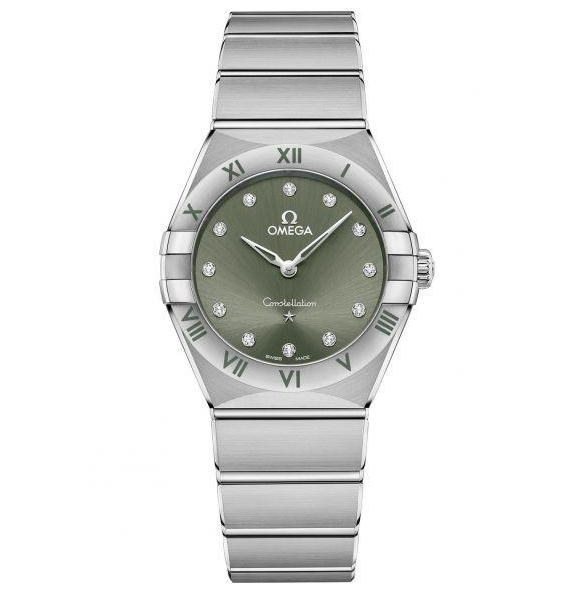
There is some history behind these colours. The pastel dial combinations first appeared in the Constellation 28mm range in 2022, so they should not be presented as an entirely new design direction in 2026. Their continued presence is more interesting as an example of how Omega has maintained a recognisable collection through carefully chosen colour and finishing changes. The smaller case, slim bracelet and polished details remain the main attractions.
The movement is also worth mentioning. These 28mm models use the quartz Calibre 4061, with a stated battery life of approximately 48 months. It is a practical choice for a compact watch, where ease of use and reliable timekeeping are more relevant than the appeal of a complicated mechanical movement. The Constellation does not need an elaborate calibre to make its design work. Its character comes primarily from the relationship between the case, bezel, dial and bracelet.
The Speedmaster approaches watch design from almost the opposite direction. Its history is tied to the development of the chronograph and its role in space exploration. The Professional Moonwatch remains the best known expression of the collection, but the 38mm range has always offered a different interpretation, with smaller proportions and a wider variety of finishes. The 2026 update brings the two closer together visually without turning the smaller model into a simple scaled down Moonwatch.
Omega introduced seven new Speedmaster 38mm references in August 2026. The most noticeable change is the replacement of the previous oval subdials with rounded registers. This gives the dial a more familiar chronograph layout and creates a stronger connection with the Professional collection. The reduced wording also makes the display look less crowded, while the thicker tachymeter bezel restores the familiar Dot Over Ninety detail associated with the Moonwatch.
The five link bracelet is another important part of the revision. Inspired by the Moonwatch bracelet, it gives the updated 38mm models a closer family resemblance. The finishing varies between references, with polished and brushed links used to create different effects. These are relatively small changes, but together they make the watch look more purposeful than the earlier version, whose oval registers gave it a softer appearance.
The seven references offer a useful range of styles. There are conventional steel versions, two tone models combining stainless steel with Omega’s proprietary gold alloys, and two versions with diamond set bezels. The latter feature 52 diamonds totalling 1.53 carats, paired respectively with an ice blue PVD dial and a white mother of pearl dial. The contrast is interesting because the ice blue version has a more consistent colour treatment, while mother of pearl introduces natural variations in the way the dial reflects light.

There is also a difference beneath the dial. Six of the seven references use the automatic Co Axial Calibre 3330 and include a date display. The black dial version without a date uses Calibre 3332. This is a useful distinction when comparing individual models, as the collection may look consistent from the outside but does not use exactly the same movement configuration throughout.
The Omega Speedmaster 38mm chronograph is therefore best understood as a separate expression of the Speedmaster rather than simply a smaller Moonwatch. Its revised dial, bezel and bracelet bring it closer to the collection’s traditional visual language, while its dimensions and range of finishes preserve a more individual character.
The Seamaster Bond and Spectre Editions Have More Than a Film Connection
Omega’s relationship with James Bond began with GoldenEye in 1995. Since then, the Seamaster has become closely associated with the character, appearing in several films and developing an identity that goes beyond its original role as a diving watch. The partnership has lasted because the Seamaster already has a recognisable design and practical purpose. The film connection adds another layer to that identity rather than having to create one from scratch.
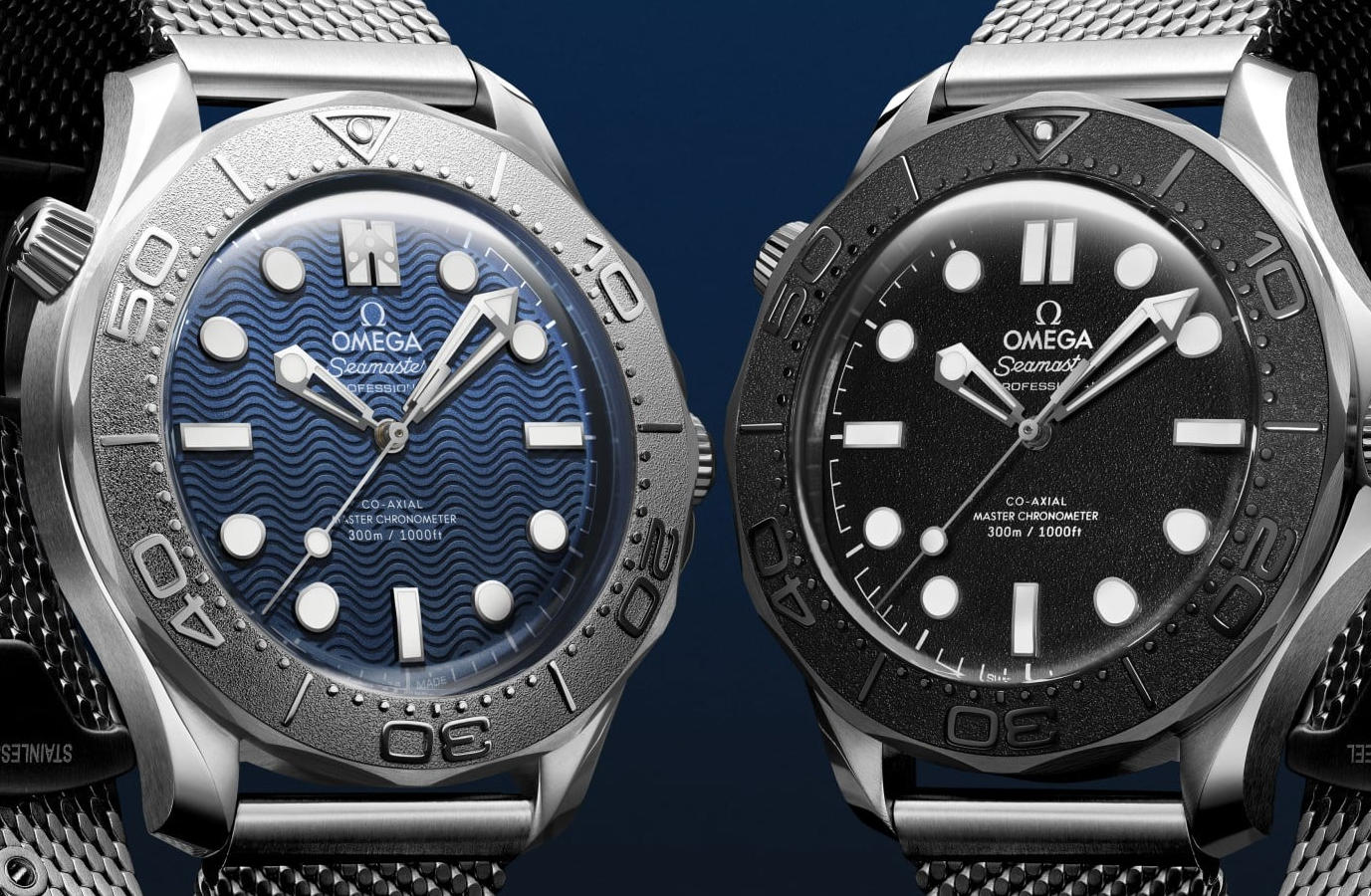
The 2026 Seamaster Diver 300M James Bond and Spectre collection takes the relationship in an interesting direction. For the first time, the two names appear together in the same collection. There are six 42mm watches in total, divided between the Bond and Spectre themes. The collection includes two stainless steel models available individually, together with two limited edition sets, each containing a stainless steel watch and a platinum gold version.
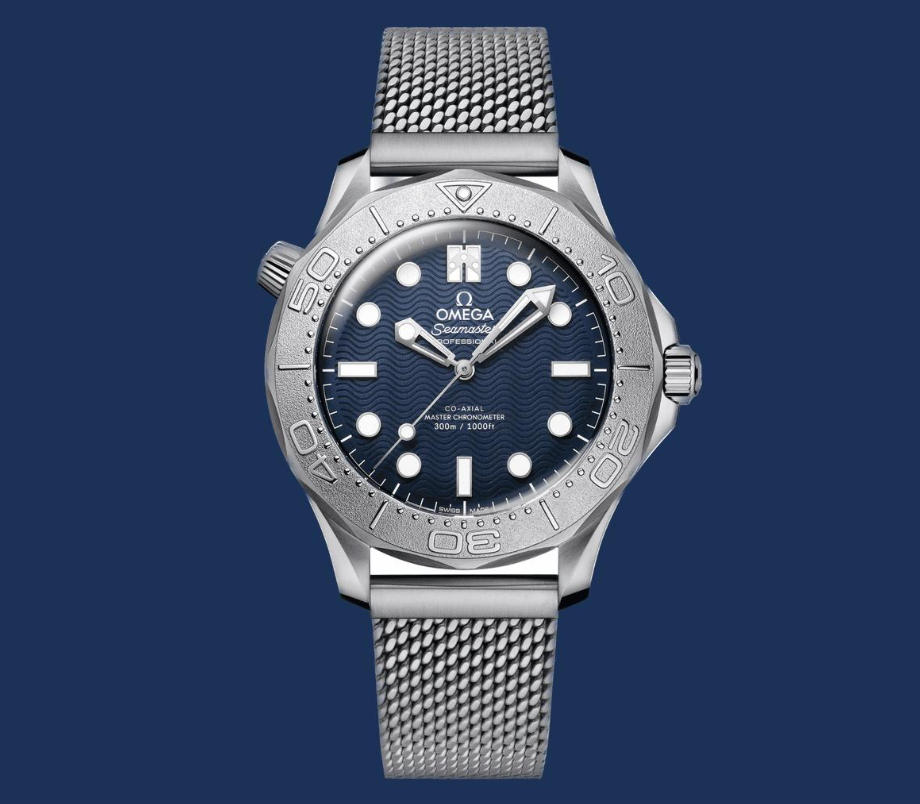
The individual Bond model uses a blue aluminium dial with the familiar wave pattern, combined with a Grade 5 titanium bezel ring. It retains the established appearance of the Seamaster Diver 300M, so the connection with the films is present without overwhelming the watch’s original design. The brushed mesh bracelet also gives it a different appearance from the more familiar three link steel bracelet seen on many earlier Seamaster references.
The Spectre version takes a darker approach. Its black ceramic bezel ring and blackened grained dial create a more restrained appearance, with texture replacing much of the visual brightness found on the Bond model. Both watches share the same basic case and use the Omega Co Axial Master Chronometer Calibre 8806. The distinction comes from their colours, materials and the details associated with each theme.
One of the more interesting features is found on the movement side. The Bond models use a gun barrel decoration on the rotor, while the Spectre versions carry the organisation’s octopus emblem. This is more considered than simply printing a film reference on the dial. It gives the watches a connection to their respective stories while keeping the main display relatively uncluttered.
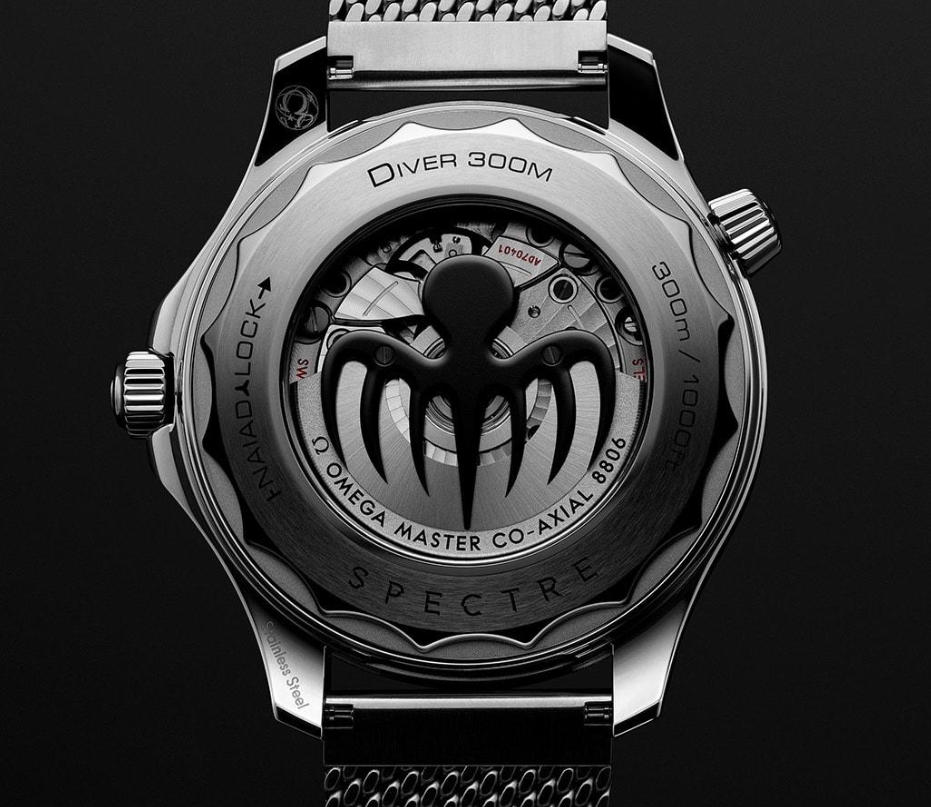
The two limited edition sets take the idea further. Each is restricted to 77 numbered sets and contains two watches, one in stainless steel and the other in Omega’s platinum gold material. The Bond set uses a blue gradient dial with a gun barrel pattern on its precious metal model, while the Spectre version adopts a darker grey dial with the octopus motif. These watches are supplied as complete sets rather than being offered separately, an important distinction when discussing their limited production.
The James Bond Seamaster Diver 300M and the Spectre edition are interesting because they retain the familiar diving watch layout while using different details to establish their identities. The blue Bond version feels closer to the traditional Seamaster, whereas the black Spectre model has a more subdued character. Neither needs an entirely new case design to communicate its theme.
These three Omega collections also demonstrate why visual similarity should not be confused with technical equivalence. The Constellation 28mm uses a quartz movement, the updated Speedmaster 38mm range uses different automatic chronograph calibres, and the Seamaster editions are built around the Master Chronometer Calibre 8806. Each movement has a different purpose and construction. A replica that resembles one of these watches does not automatically share its movement, materials, accuracy or performance.
Readers interested in Omega replica watches and their individual collections should pay attention to these differences when comparing references. The shape of the Constellation claws, the spacing of the Speedmaster subdials, the tachymeter bezel and the Seamaster wave pattern are useful visual details, but they only tell part of the story. The actual construction and operation of a watch need to be considered separately.
What makes Omega’s 2026 releases worth following is the way each collection develops without abandoning its original character. The Constellation continues to rely on proportion and finishing, the Speedmaster brings its smaller chronograph closer to the traditional Moonwatch, and the Seamaster uses its Bond history to create two contrasting interpretations of a familiar diving watch. These are three different approaches to watch design, and understanding the differences makes them considerably more interesting than a simple list of new models.